Have you seen any red beetles on your milkweed? Wait before you send them to their watery death, these are the “good guys.”
If you look carefully, long before the monarchs arrive you may see a spotted, long red beetle with curled black antennae. This is a red milkweed beetle. They may have black spots or pattern (not white spots, that’s a bad bug!)
The red milkweed beetle (Tetraopes tetrophthalmus) There are different kinds of milkweed beetles, specializing in different types of milkweed; the red milkweed beetle prefers common milkweed (Asclepias syriaca).
Most species of insects try to camouflage themselves from predators, but since milkweeds are toxic to many predators, the milkweed beetles as consumers of milkweed, are also toxic to many predators. Pretty smart for an insect!
Native long-horned beetles, such as the red milkweed beetle, have a valuable place in our ecosystem and only eat milkweed. They are not harmful to monarchs or harm monarch eggs or larvae, so we can all coexist quite happily.
As you work on your gardens this summer and fall, planting native plants in our suburban/rural gardens can help sustain the biodiversity of our ecosystem. Native birds, bees, and insects are very choosy about their food source. If it is not available, the wildlife population diminishes.
For example, due to loss of habitat, there has been a 50% reduction in population for many of our bird species in the space of 50 years (Tallamy, Bringing Nature Home). But there is something we can do.
For example, penstemon flowers (native) can feed three species of bumble bees, five species of moths, and one hummingbird species. Talk about a workhorse! The popular butterfly bush? Butterfly bushes benefit pollinators but only at one stage of their life cycle. The bush attracts butterflies because it provides copious nectar. However, butterflies need host plants on which to lay eggs and on which their caterpillars feed. Not a single native caterpillar eats Butterfly bush leaves. Butterfly bushes (not native) originate in China. (Spotlight Truth about butterfly bush). What we plant in our gardens makes a difference for bees, birds, butterflies, and beneficial insects in our neighborhood. What’s not to like?
We are now in prime season for biting insects, including mosquitoes. Mosquitoes usually remain active until hard frost. General rules to follow to reduce the hazard from them are:
Keep gutters clean and be sure they drain properly;
Remove sources of standing water in yards, where mosquitoes can breed – drain water out of flower pots, plant saucers, tarps, buckets, barrels, tires, bird baths, trash containers, toys, child’s wading pools, and other various containers and objects that can trap water;
And protect yourself with mosquito repellant particularly at dawn and dusk.
In pools of water you cannot empty, such as rain barrels, water gardens, swimming pools and tree cavities, you can treat them with mosquito dunks. These doughnut shaped wafers contain a naturally occurring bacterium known as Bacillus thuringiensis israelensis that kills mosquito larvae before they are able to mature. Mosquito dunks containing this bacterium are effective for around 30 days and are not harmful to fish, birds, mammals or other wildlife. You may need to replace them sooner after heavy downpours.
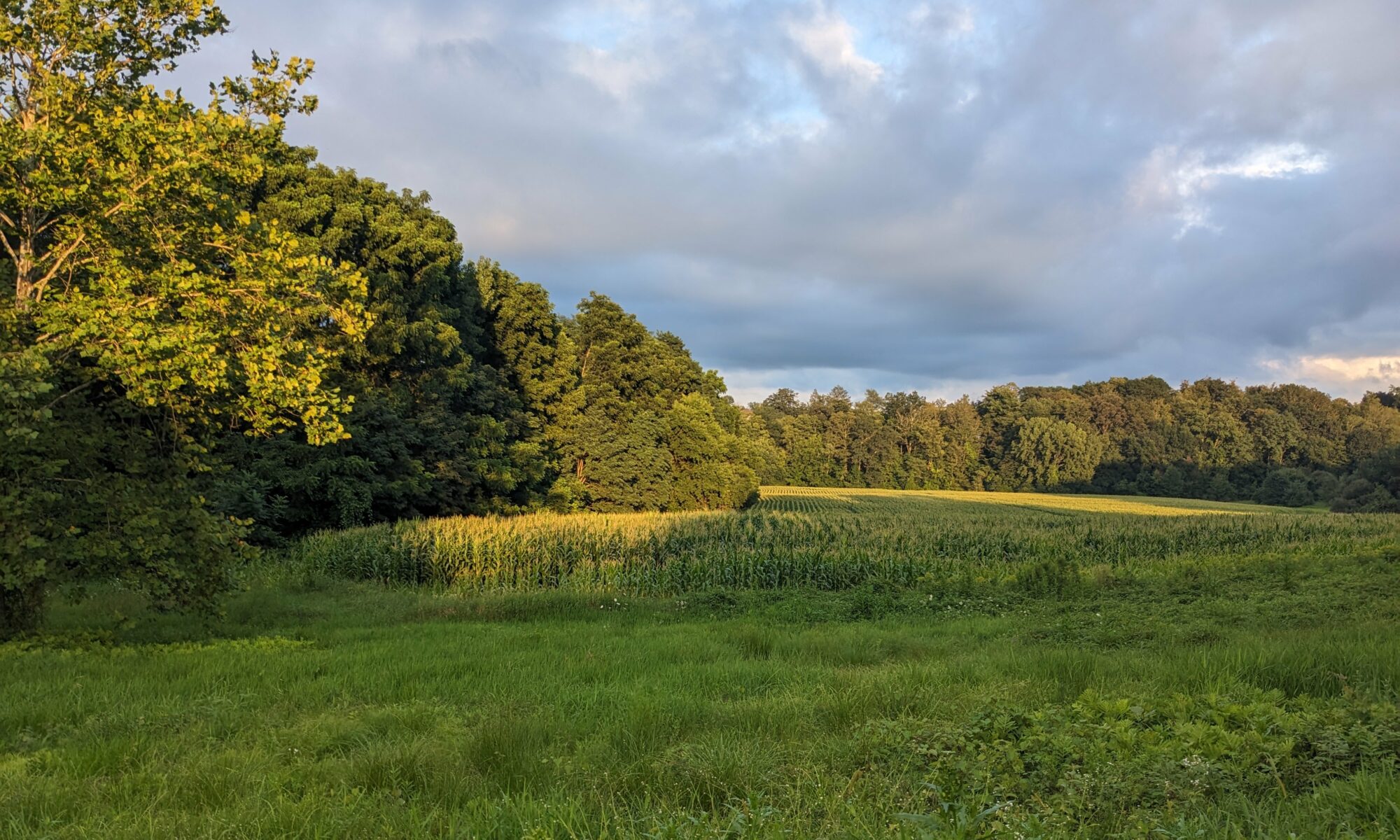
Karen highlighted at a recent full circle meeting that Grounds has divided up all of our land into 13 areas and is examining each to come up with a plan for further planting and improvement. This issue, we want to highlight the area behind the carports on the North side, between VHC and the North Commons development.
A sub-team from Grounds Circle is interested in planting native fruit and nut trees on the hillside between Village Hill and North Commons. The tentative purposes are to grow native foods for the community, create wildlife habitat and reduce the impact of invasive plants that reduce wildlife habitat.
Potential plants include pawpaw, American persimmon, Canadian plum, American chestnut and others. Details about these plants are here. There is a map of the site with potential plant placements in the small dining room in the common house. Look for the VHC map with circles of colored paper on it.
We hopefully will move these maps to a more visible area near the mailroom. Our plan is to finish making an overall plan, one that may take years, and show it on the map. Then each planting season we will pick a piece of it to tackle and slowly we will fill in the map to show the areas that have been worked and the ones that remain.
Several VHC community members are engaged in “Circles of Care” to assist two Afghan refugee families (two men, two women, and three children under the age of three) in Western Massachusetts. The women are home with the children all the time while the husbands are working.
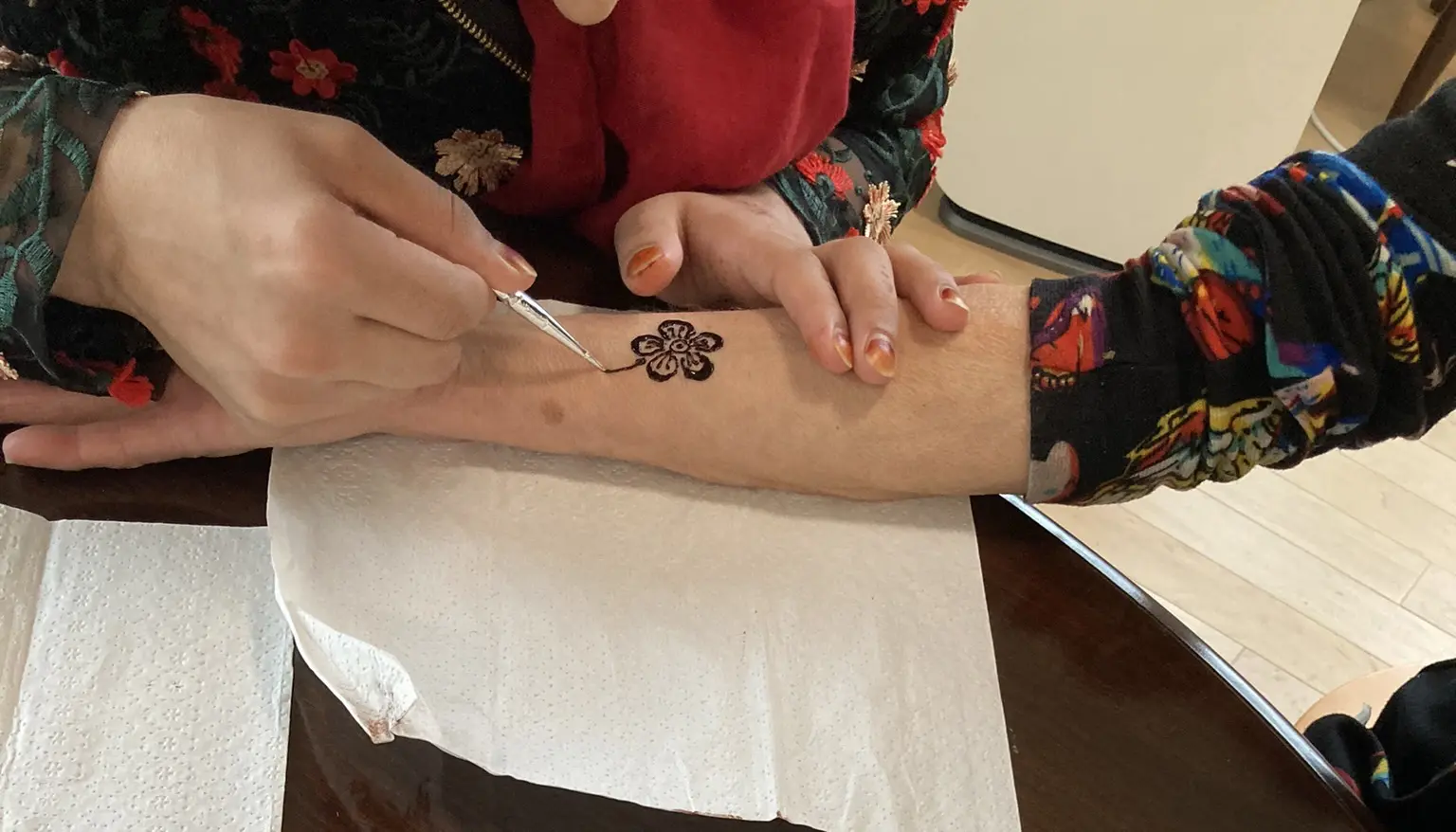
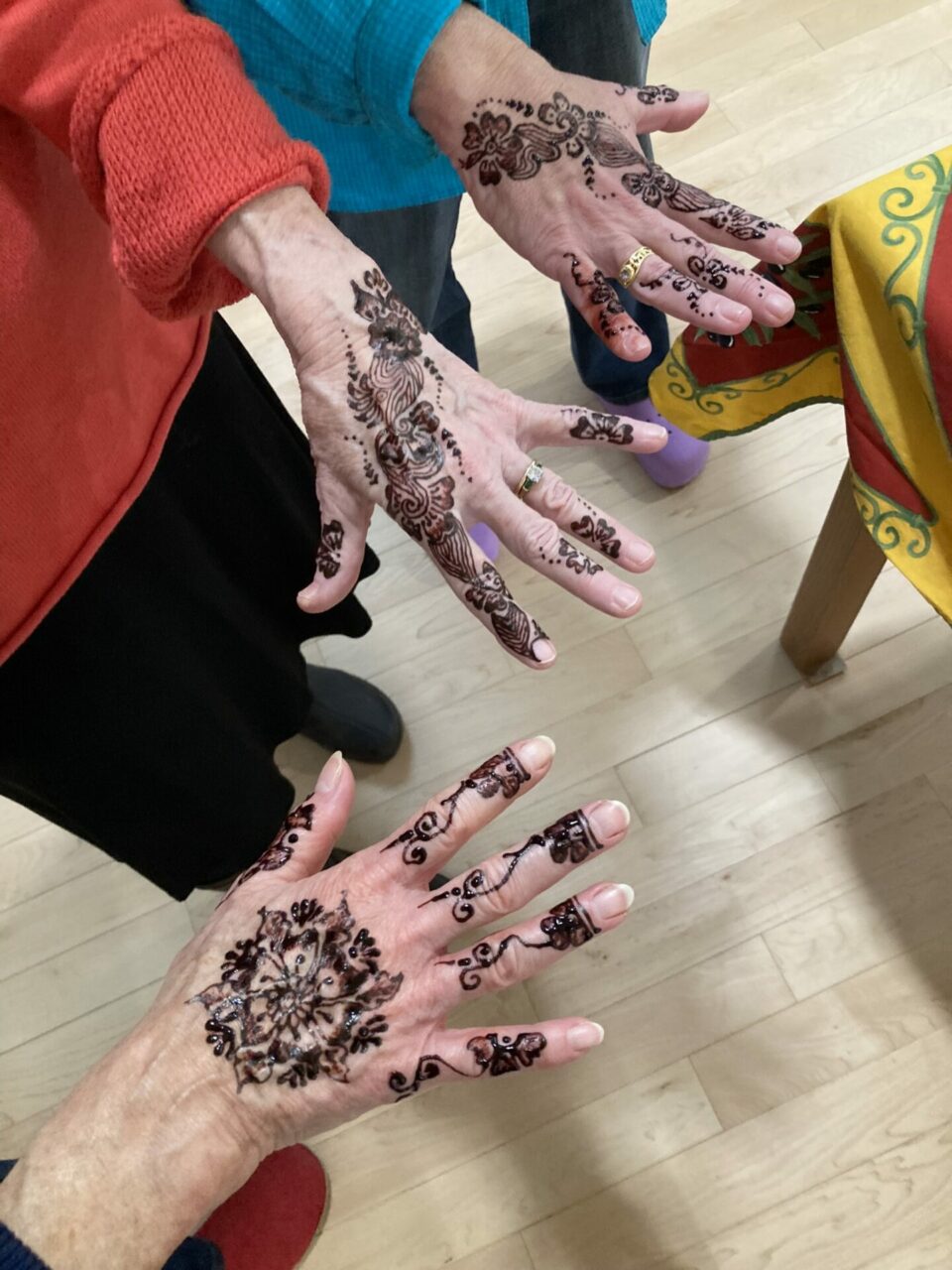
Over the last year, we had noticed a wonderful skill they had: creating beautiful henna designs on their hands, and those of the circle members.
Henna is a plant-based dye, used in colored inks and delicately applied to various body parts in beautiful patterns. It’s used during celebrations of special occasions and gatherings, and is meant to bring good luck and happiness.
We asked the women if they would be interested in holding a ‘Henna Tea Party’, with in the Common House VHC’s neighborhood residents invited to get a henna design and make a donation.
Initially they were very nervous about this, unsure about what they were getting into, how it would work and how they would feel. But they have a spontaneous, creative and resilient spark in them – and they agreed. As the planning started, they became more and more excited and involved.
The “Henna Tea Party” took place at the end of December. Neighborhood residents were invited to participate and asked for a donation.
On the day of the party, we all created an atmosphere of celebration and Afghan culture, with appropriate decorations, music, tea, and snacks. More than thirty people came, each scheduled for a henna design every 15 minutes. And we heard from many more who couldn’t come but donated anyway.
Afterward, the women said they totally enjoyed themselves. They liked being able to talk to each person during the time they were in front of each other.
“I was tired but also felt very happy.”
“I liked my work and felt good.”
“I was happy that they were happy and it was the best feeling I had since I came to the US.”
This event served several purposes. It educated and exposed the local community to the Afghan families and Afghan culture. Everyone had fun and helped raise money to support these families. The women had a chance to share their gifts and talents, and interact with the local community. And most importantly, they had a sense of accomplishment, of doing something meaningful on their own.